 |
| Image Source:http://oceanofgames.com/wp-content/uploads/2014/04/call-of-duty-system-requirements.png |
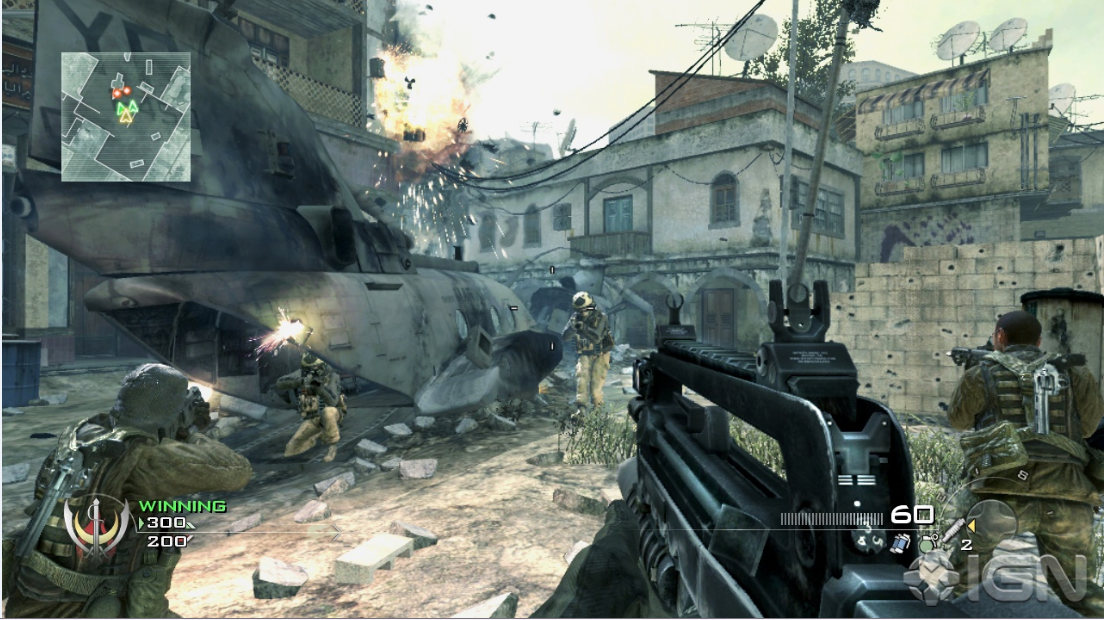
Violence in video games is usually not something that is on my radar. Growing up I occasionally played Sonic the Hedgehog on my brother's Sega Genesis but never really got into them. While watching the documentary I was shocked to see how graphic the images were, and how realistic video games are now. There have been a number of shootings in recent years, as is the case with most tragedies, politicians and the public have blamed the media. Video games are no exception. It's natural to want to understand why violence occurs and when it occurs, especially when there is a mass killing, but many single out media as a primary source for violent inspiration. What I liked the most about the documentary "Joystick Warriors" was that it explored other potential problems of playing violent games, such as lack of empathy and an unhealthy idea of what it means to be a man. While I don't think that playing violent video games causes violent behavior, I can see how the game might contribute, along with other risk factors, such as mental illness, and violence in the home. During the 2005 Red Lake High School shooting Jeff Weise killed his own grandfather along with 9 others before turning a gun on himself. In an interview with NBC news, Dr. Katherine Newman of Princeton University weighs in on the shooting's connection to violent video games: "What I mean by a "script" is that when you look at popular culture, movies, video games, you will see this kind of "shoot 'em" pathway running through many of them" "What it tends to reinforce in a shooter's mind is not so much a violent impulse as a template for how to be notorious and alluring and cool..."
I believe this appeal to be "cool" is perpetuated by media as well as video game portrayals of men. It's obvious that very little space exists for men in these games who don't fit the hyper-masculine idea of manliness. Not only do violent video games celebrate military violence (in a very unrealistic way), they also create a potential costumer for the gun industry. The guns depicted in the video games are guns that can be purchased in real life, with many of the guns bearing the name of the gun manufacturer. Children start to play video games at a very young age, and many transition to more violent games even if their parents forbid it. The gun manufacturers, by allowing game makers permission to use their models in games, are essentially marketing real-life guns to kids, increasing the risk that they will become adult customers. Video games glamorize guns without demonstrating gun safety or real consequences to gun-violence, and this is the problem.
See Video:
Top 10 Guns in Video Games
Sources:
http://www.nbcnews.com/id/7288381/ns/us_news-crime_and_courts/t/school-shooter-followed-video-game-like-script/#.WKqGY_nys2w
https://www.mprnews.org/story/2015/03/18/red-lake-shooting-explained
http://www.npr.org/sections/alltechconsidered/2013/04/29/179853504/a-real-world-connection-between-video-games-and-guns
https://youtu.be/H6nq6LCYLVg

Hi Elizabeth,
ReplyDeleteI do agree that the depictions of the military and masculinities are very unrealistic and that possibly demonstrating gun safety and real consequences would really help. However, I'm wondering to what extent it would work. There is still a screen between the player and the world made by corporations which helps with the desensitization of the players. There are constant shootings around the U.S. demonstrating real gun consequences yet many people tend to just move on with their lives. This goes beyond implementing safety features in video games, it needs to be implemented in society as a whole and their views on masculinities.